
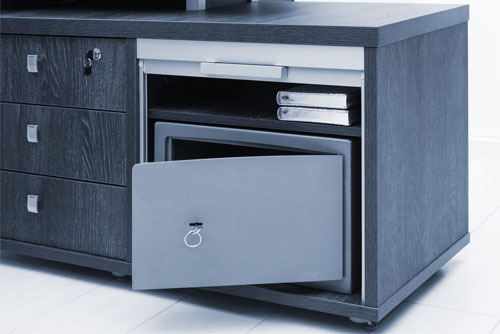
Australian homes and businesses are facing increased threats from bushfires, floods, and wild weather. If you care about protecting documents, valuables, and data, you need to understand how different safes respond to fire and water.
Choosing the wrong protection leaves critical gaps that only become obvious after damage occurs.
Knowing whether to prioritise a fireproof safe or waterproof protection – or both – reduces the risk of permanent loss.
Understanding the Difference Between Fireproof and Waterproof Safes
A fireproof safe protects contents from extreme heat, smoke, and radiant temperatures during a fire. It uses fire-resistant insulation, composite wall construction, and heat-expanding door seals to slow internal temperature rise during prolonged exposure.
A waterproof safe protects contents from flooding, heavy rain, and internal leaks through sealed doors and compression gaskets. Fireproof safes are not automatically waterproof, and waterproof safes do not protect against high temperatures or smoke damage.
Why Fire Protection Matters for Australian Homes and Businesses
Fire risk remains a constant concern across Australia. Bushfires, electrical faults, and accidental house fires expose homes and workplaces to extreme temperatures within minutes, often without warning.
In Western Australia this season, emergency services investigated 184 bushfires as of January 2026, underscoring how often fire ignites and spreads across varied landscapes.
Heat destroys paper, cash, jewellery, and electronics quickly. Documents char at low temperatures, digital media fails sooner, and smoke contaminates contents. In bushfire-prone Western Australia and New South Wales, a fireproof safe is an essential investment for protection and peace of mind.
Why Water Resistance Is Just as Important
Australians understand the damage that floods can do, but many overlook the secondary causes of water damage. Burst pipes, appliance failures, roof leaks, and storms can quickly destroy or damage sensitive items.
Firefighting efforts also flood buildings with water. Even small fires expose safes to prolonged moisture from hoses and sprinklers. This moisture damages paper, corrodes metal components, and destroys electronics, often causing losses long after flames are extinguished.
Waterproof safes protect contents through sealed doors and tested resistance. They safeguard items that fail when wet, including passports, certificates, photographs, and digital media. Verified water ratings ensure contents remain secure during floods, leaks, and emergency response events.
Fire Ratings Explained: What to Look For
Fire ratings show how long a safe protects contents in a standardised fire test. In Western Australia, government guidance points to Australian Standards for fire-resistance testing methods, including AS 1530.4:2014.
Manufacturers may also cite international schemes like UL 72, the Underwriters Laboratories (UL) standard for fire resistance testing in safes, and NT Fire 017, the Nordtest (NT) method.
These standards certify using time bands like 30, 60, and 120 minutes. It’s important to remember that these numbers describe a test under controlled furnace conditions, not a guarantee for every fire.
Temperature thresholds matter as much as time. UL’s record-protection classes link protection to internal limits, with Class 350 designed for paper records. NT Fire 017 distinguishes paper and data media, with stricter internal limits for sensitive storage.
When assessing a fire resistant home safe, look for:
- A stated duration tied to a named standard
- Internal temperature limits tied to your contents
- Independent test documentation or certification
Waterproof Ratings Explained: IP and Submersion Tests
Water resistance is measured using Ingress Protection (IP) ratings, defined under AS 60529, which Australia adopts from IEC 60529. These ratings describe how well an enclosure resists water under controlled laboratory test conditions.
For water exposure, IP ratings use the “X” designation. Common ratings include IPX4, which covers splashing water from any direction, and IPX7, which covers temporary immersion under standardised conditions, typically up to one metre.
IPX8 applies to continuous immersion beyond IPX7 limits. In this case, the manufacturer must clearly state the test depth and duration. Because flooding varies in depth and exposure time, these details are critical when assessing real-world protection.
Choosing Based on What You’re Protecting
The best safe choice depends on what you store and how it fails under stress. Many buyers focus on the safe first and the contents second, which often leads to poor outcomes.
Prioritise fire protection if you store:
- Legal documents and records
- Cash, jewellery, and precious metals
- Paperwork required for insurance or compliance
Prioritise waterproof protection if you store:
- Digital backups and external drives
- Photographs and printed archives
- Electronic devices and media
Best Placement Tips for Fireproof and Waterproof Safes
Placement directly affects how well a safe performs during emergencies. Avoid installing safes near heat sources, fuel storage, or flood-prone areas. Correct positioning reduces exposure to fire and water and improves long-term performance.
Choose a discreet location with a solid installation surface that supports secure anchoring. Concrete floors provide the strongest fixing points, while tiled or timber floors may need reinforcement. Secure anchoring prevents removal and helps meet insurer installation requirements.
Safes require regular checks to maintain protection. Door seals compress, hinges corrode, and humidity causes damage over time. Inspect seals, locks, and hinges regularly, control internal moisture with desiccants, and arrange professional servicing when components degrade.
Learn more: Why Every Australian Home Needs a Fireproof Safe for Bushfire Protection.
Askwith Truly Fire Safes – Fireproof Home Safe Review
The Askwith Truly Fire Safe range delivers certified fire protection for homes and offices that need reliable storage. Independent testing confirms 120-minute fire resistance at 1,000°C, making these safes suitable for high-risk environments.
Why They Stand Out
- Use high-density fire-resistant concrete to slow internal temperature rise
- Combine reinforced steel construction with secure locking mechanisms
- Allow bolt-down installation to improve stability and deter removal
- Reduce water exposure when users install the safe correctly and avoid flood-prone areas
Protect Your Valuables with the Right Safe
Fireproof and waterproof safes protect against different threats, and your location and stored items should guide the decision. Documents and valuables need heat resistance, while electronics and records fail quickly when exposed to water.For long-term security, balanced protection often delivers the best outcome. To explore suitable options or get expert advice, contact Askwith at reception@askwithcompany.com.au or call (08) 9451 7848 to secure your valuables against whatever may come.